In industrial high-temperature air heating systems, the sheath material of an electric heating element is one of the most critical factors affecting equipment reliability, service life, and temperature control accuracy. Unlike liquid heating applications, air heating operates under dry conditions with limited heat dissipation. As a result, the actual surface temperature of the heating tube can be significantly higher than the chamber temperature.
If the seath material lacks sufficient heat resistance or oxidation resistance, it can lead to tube oxidation, insulation degradation, heating wire burnout, deformation, and premature failure.
This article explains the most commonly used materials for high-temperature air heating elements, their temperature ratings, performance characteristics, application scenarios, and engineering selection guidelines.
Why Material Selection Matters in High-Temperature Air Heating
Air heating differs fundamentally from liquid heating because there is no surrounding medium to efficiently remove heat from the heating element surface. This creates:
• Higher surface temperatures
• Greater thermal stress
• Increased oxidation rates
• More severe thermal cycling effects
For long-term reliability, the sheath material’s continuous operating temperature should exceed the actual tube surface temperature by at least 20%–30% to provide an adequate safety margin.
When selecting a heating element material, engineers should consider:
• Maximum operating temperature
• Oxidation resistance
• Thermal fatigue resistance
• Creep resistance
• Mechanical stability at elevated temperatures
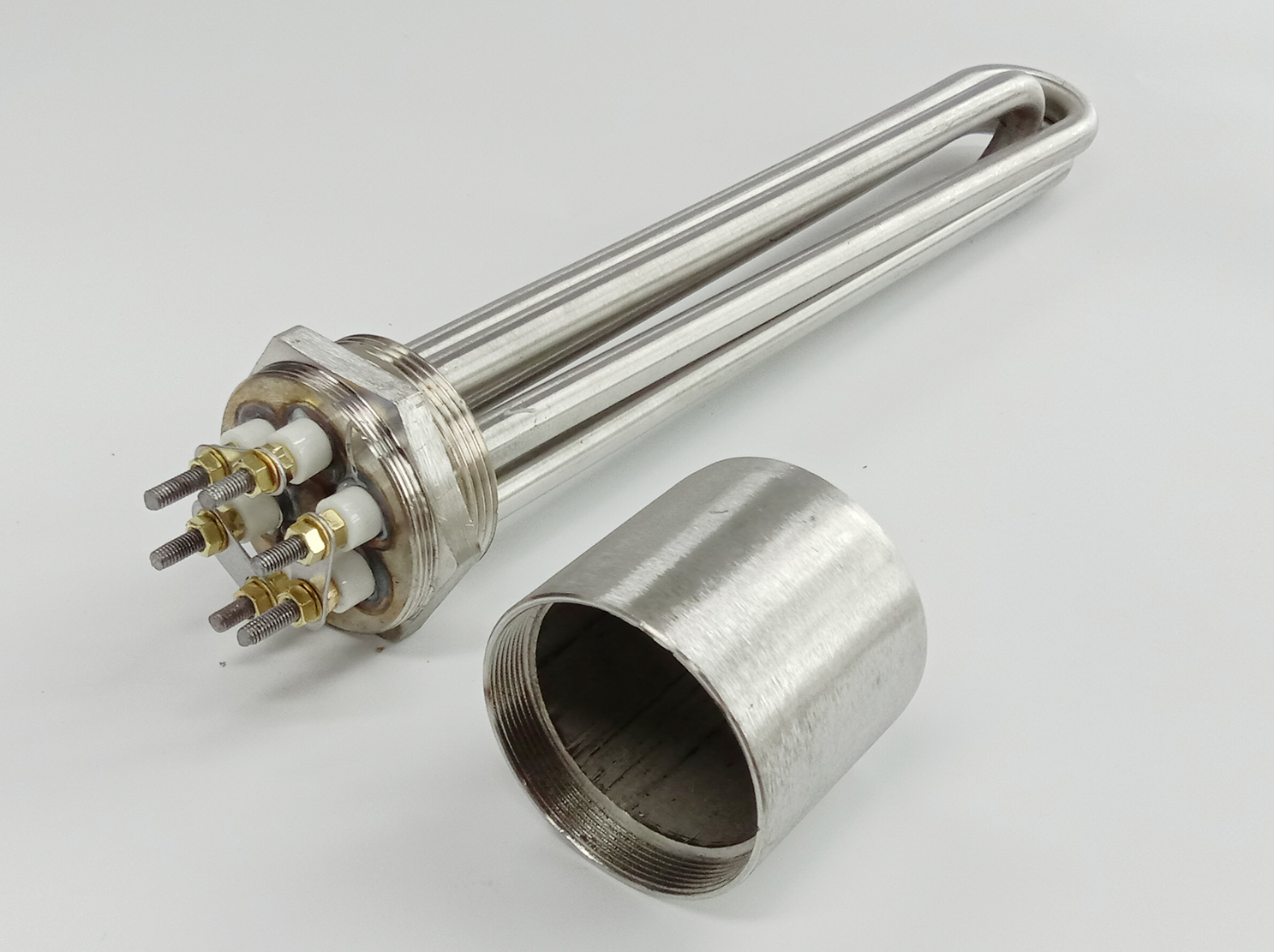
Common Sheath Materials for High-Temperature Air Heating Elements
1. 304 Stainless Steel (General Low- to Medium-Temperature Applications)
Maximum Continuous Operating Temperature
≤ 350°C (662°F)
Key Characteristics
304 stainless steel is the most widely used austenitic stainless steel due to its:
• Good corrosion resistance
• Excellent formability
• High mechanical strength
• Cost-effectiveness
• Non-magnetic properties
It performs well in low- and medium-temperature air heating applications.
Recommended Applications
• Industrial drying ovens
• Air ducts
• Packaging equipment
• Standard hot-air circulation systems
• Continuous heating processes below 350°C
Limitations
At temperatures above 350°C, oxidation resistance decreases significantly. Prolonged exposure may result in:
• Surface scaling
• Discoloration
• Thermal fatigue cracking
• Reduced service life
For higher temperatures, upgraded materials are recommended.
2. 321 Stainless Steel (For Thermal Cycling and Intermittent Operation)
Maximum Continuous Operating Temperature
≤ 450°C (842°F)
Key Characteristics
321 stainless steel is titanium-stabilized, providing improved resistance to intergranular corrosion and thermal fatigue.
Compared with 304 stainless steel, 321 offers:
• Better thermal shock resistance
• Improved cyclic heating performance
• Enhanced structural stability under repeated start-stop operation
Recommended Applications
• Batch drying systems
• Intermittent production lines
• Hot-air circulation heaters
• Equipment with frequent heating cycles
• Operating temperatures between 350°C and 450°C
Advantages
For applications involving frequent startup and shutdown cycles, 321 stainless steel often provides a longer service life than standard grades.
3. 310S Stainless Steel (Industry Standard for High-Temperature Air Heating)
Maximum Continuous Operating Temperature
≤ 800°C (1472°F)
Short-Term Maximum Temperature
Up to 1000°C (1832°F)
Key Characteristics
310S stainless steel contains elevated levels of chromium and nickel, providing outstanding:
• High-temperature oxidation resistance
• Creep resistance
• Structural stability
• Thermal deformation resistance
It is one of the most widely used materials for industrial high-temperature air heating elements.
Recommended Applications
• Heat treatment equipment
• Powder coating curing ovens
• Industrial furnaces
• High-temperature air ducts
• Continuous drying systems
• Thermal processing equipment operating between 450°C and 800°C
Advantages
310S maintains excellent mechanical properties even under prolonged exposure to high temperatures, making it the preferred choice for many industrial air heating applications.
4. Incoloy 800 (Premium Material for Extreme High-Temperature Applications)
Maximum Continuous Operating Temperature
≤ 950°C (1742°F)
Key Characteristics
Incoloy 800 is a nickel-iron-chromium alloy specifically designed for extreme-temperature environments.
Key benefits include:
• Exceptional oxidation resistance
• Superior creep resistance
• Excellent structural stability
• Resistance to sulfur-containing atmospheres
• Minimal performance degradation at elevated temperatures
Recommended Applications
• Industrial heat treatment furnaces
• Precision thermal processing equipment
• Continuous high-temperature production lines
• Advanced industrial furnace systems
• Applications exceeding 800°C
Advantages
For demanding environments where standard stainless steels cannot provide sufficient durability, Incoloy 800 offers superior long-term reliability and service life.
Recommended Surface Watt Density for High-Temperature Air Heating Elements
Material selection alone does not guarantee durability. Surface watt density must also be properly matched to the operating temperature.
Excessive watt density can cause localized overheating and significantly reduce heater life.
| Material | Recommended Temperature Range | Maximum Surface Watt Density |
| 304 Stainless Steel | ≤350°C | ≤1.5 W/cm² |
| 321 Stainless Steel | 350–450°C | ≤1.2 W/cm² |
| 310S Stainless Steel | 450–800°C | ≤1.0 W/cm² |
| Incoloy 800 | Above 800°C | ≤0.8 W/cm² |
Proper watt density design helps prevent:
• Sheath overheating
• Oxidation acceleration
• Insulation degradation
• Premature heating element failure
Common Engineering Mistakes When Selecting High-Temperature Heating Elements
Using 304 Stainless Steel in High-Temperature Applications
Selecting standard 304 stainless steel for high-temperature dry heating can dramatically increase oxidation rates and shorten service life.
Ignoring Thermal Fatigue
For equipment with frequent heating cycles, choosing a material solely based on temperature resistance may result in premature cracking caused by thermal expansion and contraction.
Excessive Watt Density
Increasing heater power without considering surface loading can push the sheath temperature beyond material limits.
Over-Specification
Using expensive nickel-based alloys in low-temperature applications may unnecessarily increase project costs without improving performance.
How to Choose the Right Material for Air Heating Elements
A simple guideline for material selection is:
Up to 350°C
304 Stainless Steel
Suitable for standard industrial air heating and drying applications.
350°C – 450°C
321 Stainless Steel
Ideal for thermal cycling and intermittent operation.
450°C – 800°C
310S Stainless Steel
The preferred choice for most industrial high-temperature air heating systems.
Above 800°C
Incoloy 800
Recommended for extreme-temperature and continuous-duty applications.
Custom High-Temperature Air Heating Elements Manufacturer
Hotbox specialize in the design and manufacture of custom high-temperature air heating elements, finned tubular heaters, and duct heaters for industrial applications.
Based on your operating temperature, airflow conditions, duty cycle, and watt density requirements, our engineering team can recommend the optimal material and heater configuration.
Hotbox heating elements feature:
• High-purity magnesium oxide insulation
• Premium NiCr resistance wire
• Seamless high-temperature sheath materials
• Excellent oxidation resistance
• Stable performance under dry-heating conditions
• Long service life in demanding industrial environments
Whether you need a custom-designed heater for a new project or a replacement solution for existing equipment, we provide reliable, application-specific heating solutions for industrial customers worldwide.
Frequently Asked Questions (FAQ)
What is the best material for high-temperature air heating elements?
For temperatures up to 800°C, 310S stainless steel is generally the most widely used and cost-effective option. For temperatures above 800°C, Incoloy 800 is often recommended.
Can 304 stainless steel be used for dry heating?
Yes, but it is typically recommended for applications below 350°C. Higher temperatures may significantly reduce its service life.
Why is watt density important?
Excessive watt density can cause the heater surface temperature to exceed the sheath material’s limit, leading to oxidation, insulation failure, and shortened heater life.
What material is best for industrial furnace heaters?
For most industrial furnace applications, 310S stainless steel or Incoloy 800 are preferred due to their superior high-temperature performance and oxidation resistance.
We specialize in designing products to your specific requirements. Let us help you find the right solution.
Contact Us